
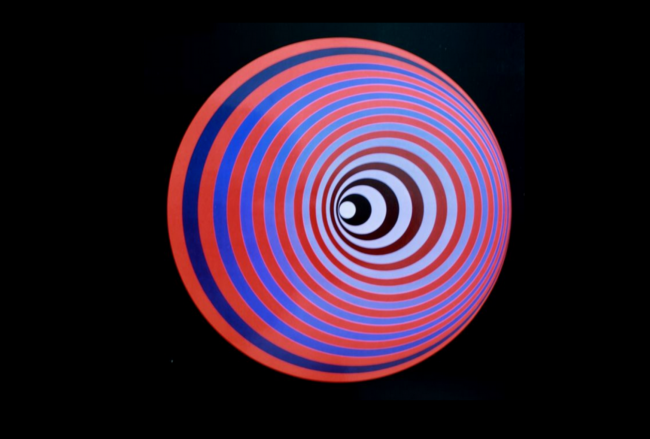
Source: https://forum.processing.org/two/discussion/21967/recreating-spiral-artwork
Question 1
Recreating an existing visual allows any artist to experiment with the style and conception presented in the visual. Doing so can save the time and effort involved in “copying down” the original artwork, and can make modifications convenient and immediate. The way Vera Molnar showcased different variations of the same work she’s been doing serves a perfect example: any changes she desires can be attained by adjusting a few parameters.
In addition, recreation can also expand certain artistic freedom to the general public. In addition to an artist’s creative intuition, while drawing and painting requires years of physical training (progress is often stagnant) and a huge fee purchasing and replacing the materials, coding can be learned by anyone with adequate programming knowledge (which certainly also takes time, but progress in a more guaranteed pace) and computer alone.
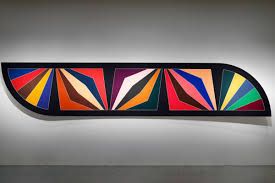
If a person (lets assume that he isn’t an artist) wants to test out different color variations for this artwork, he might adopt certain shape functions and change each shape’s fill color. However, if this is to be done on paper, the person would have to buy acrylic/oil paints, delineate the shape’s strokes with the assistance of tool, find the proper combination and fill those colors in. If he messed up the shapes and paints in the process, or if he find his modification uncomfortable, he would have to reiterate this laborious process. However, all this on a computer can be done with some clicks and some trials to be run.
Question 2
No, hand and computational drawings don’t cause the same feelings in the viewer. Alike the way we analyze the context of a novel’s creation in a literature class, the way we perceive the method of an artwork’s creation might determine the knowledge and inspirations we receive from an artwork. In some way, a work involving intensive human labor can invoke empathy from the viewers. For example, if I see a classmate drawing a perfectly-round circle, I would praise him/her for great artistic skills and precision; however, if he/she had done so using a processing tool, even with the knowledge I have of coding for now, I wouldn’t be impressed.
Question 3
Technology would probably replace human in certain career tracks in the future, since their productivity and precision are already useful in production and constructions. However, in arts, their ability to absorb from the current arts and to convey aesthetic needs is unconnected to the internal states of a human creator, or even a society, for the viewers to empathize with. Inspirations are always drew from what an artist actually experienced or empathized with, with an emotional subtlety that computer might not capture. In most cases, computers are merely tools to create and mediums to exhibit ideas. They can be “artist” in a general state since they follow the same procedures of a human artist in generating an artwork (with often matchable qualities), but their works lack intention and purpose.
Leave a Reply
You must be logged in to post a comment.